
“In the Bleak Midwinter”
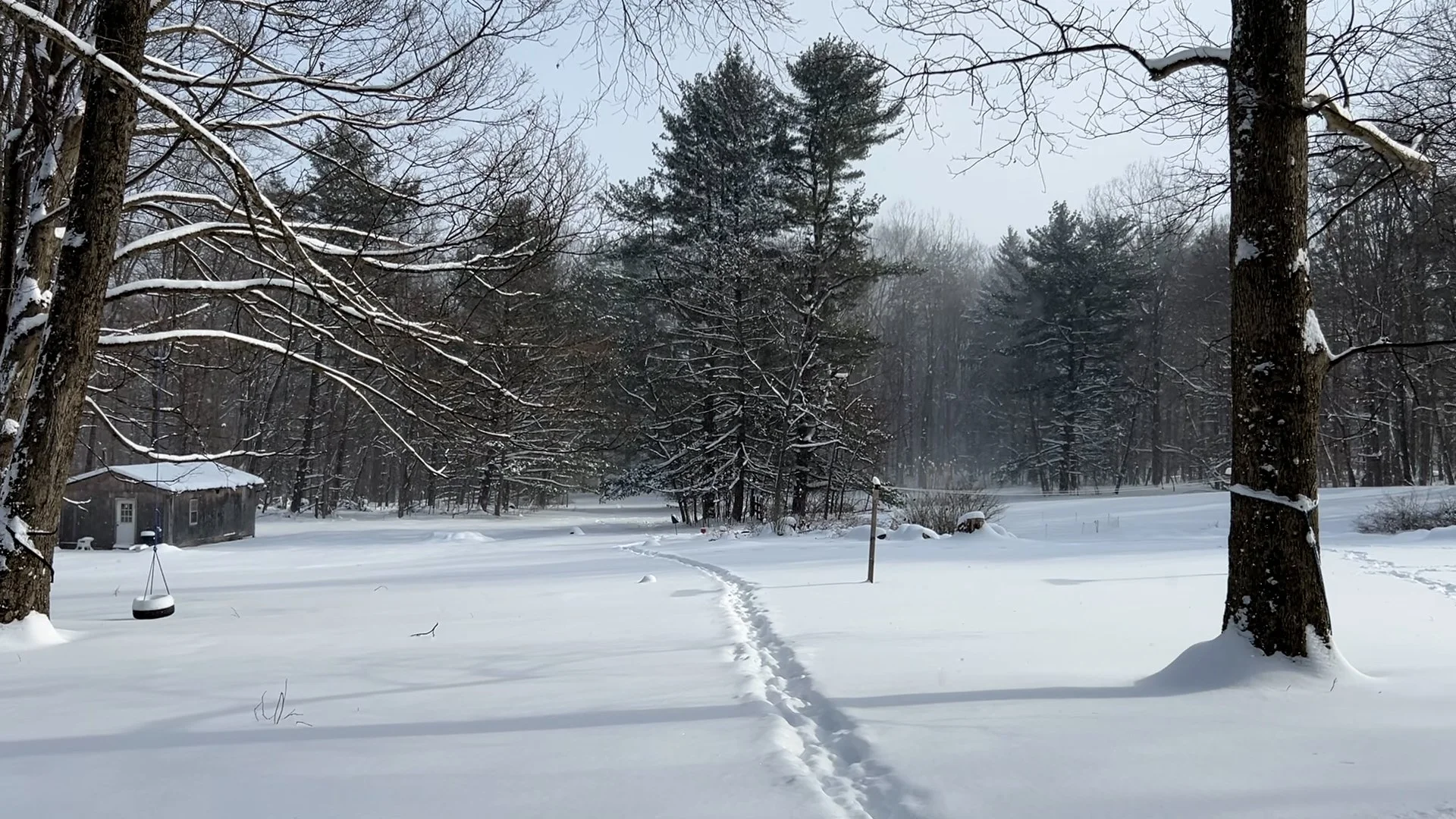
Snow-covered sunny morning on the farm.
If you ask me, there’s no such thing. Seasonal Affective Disorder has no hold on me, though I can’t say the same thing for everyone in our household. Though I LOVE waking up to see the trees gently coated in a cozy white blanket; though I do prefer to labor in layers that can be shed to regulate temperature; though enjoy the warmth of a fire; winter on a farm can present some challenges.
The typical obstacles you think of during winter in Ohio, including difficult road conditions, some bitter cold days, snow, sleet, freezing rain, etc. are all things we’ve dealt with on the farm in the past. This winter, however, seems to be an arctic blast from the past. In the Midwest I’ve heard other farmers say they haven’t seen a winter quite like this one since the late 1970’s and early 1980’s.
Last year we had a good solid month of frigid temps which made the snow stick around but we did not accumulate very much. The pigs and chickens are hardy animals and we’ve provided them with more than suitable shelter from the wind and precipitation. It’s nothing for a Kunekune to push a couple inches of snow aside to get at some green forage tucked away underneath.
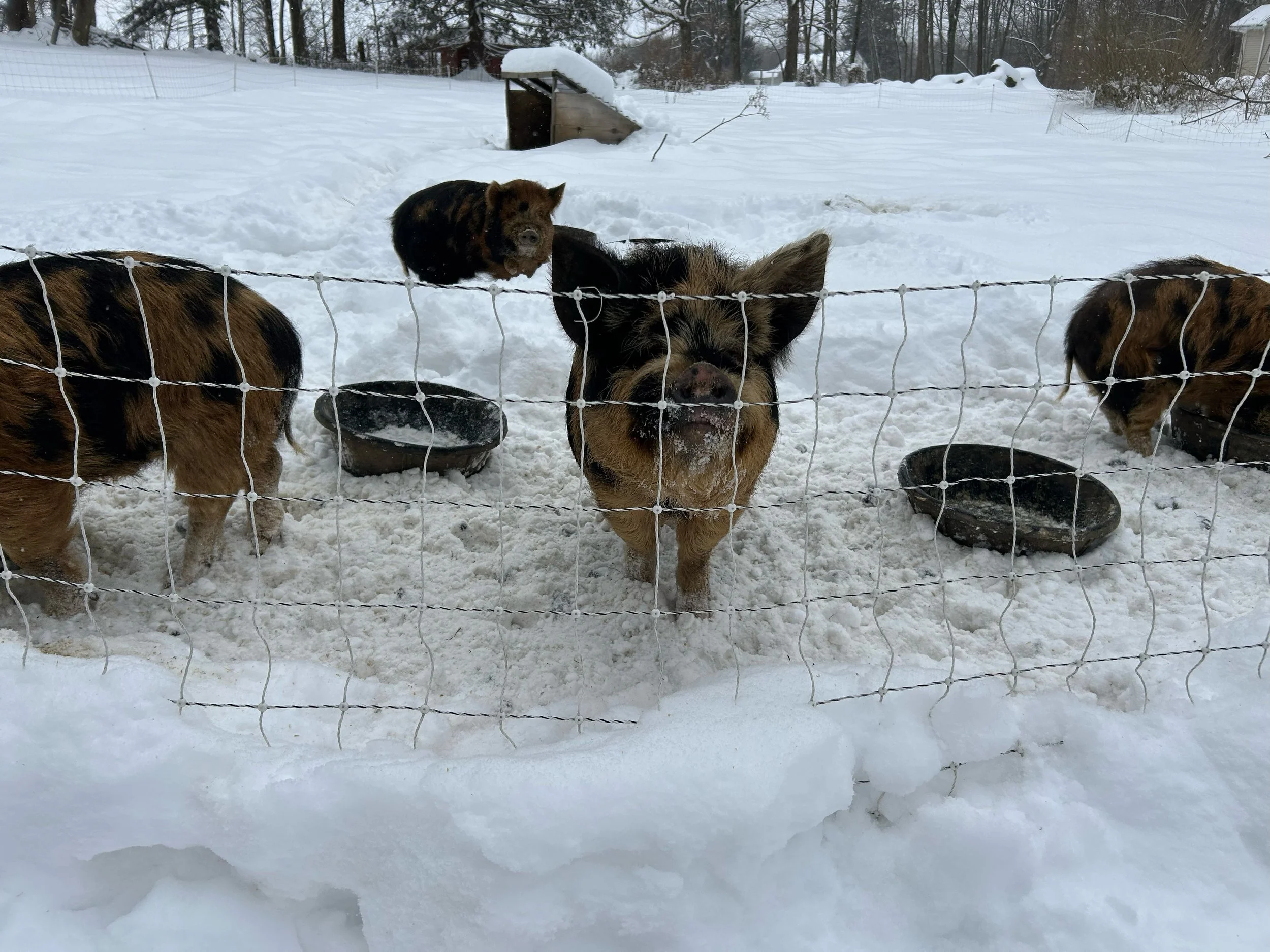
Ham, one of our feeder pigs, begging for more feed on a chilly -5°F morning.
This year is totally different. For our region, we’ve broken into the top 5 coldest continuous stretches of cold in recorded history. The coldest on record since the mid 80’s. To boot, we’ve had 12 inches of accumulated snow that stuck around for more than a month because of those arctic temperatures. That’s the type of snow that makes the already short and stout Kunekune shuffle-walk all but impossible.
One major and unexpected challenge we face this year is the electric fence grounding out because so much of it is buried in the snow. Where the pigs and I have walked and compacted the snow, in spots, more than 10 inches of the fence is covered, unable to pass the current properly. We believe we have two choices. First, we could continue to move the pigs, using a shovel to dig out a trench in the snow where the new fencing will sit. The problem with this is, because of the deep snow, the pigs will just pack down snow pockets all over the pasture, making for longer spring thaw times before that grass is usable pasture again. The second option, which we’ve chose, is to leave the pigs stationary. Deal with the accumulation of snow, and manure, until some of this snow melts away. We’ve chosen a section of pasture with some shelter from evergreen trees as the winter stomping grounds and it seems to be working just fine.
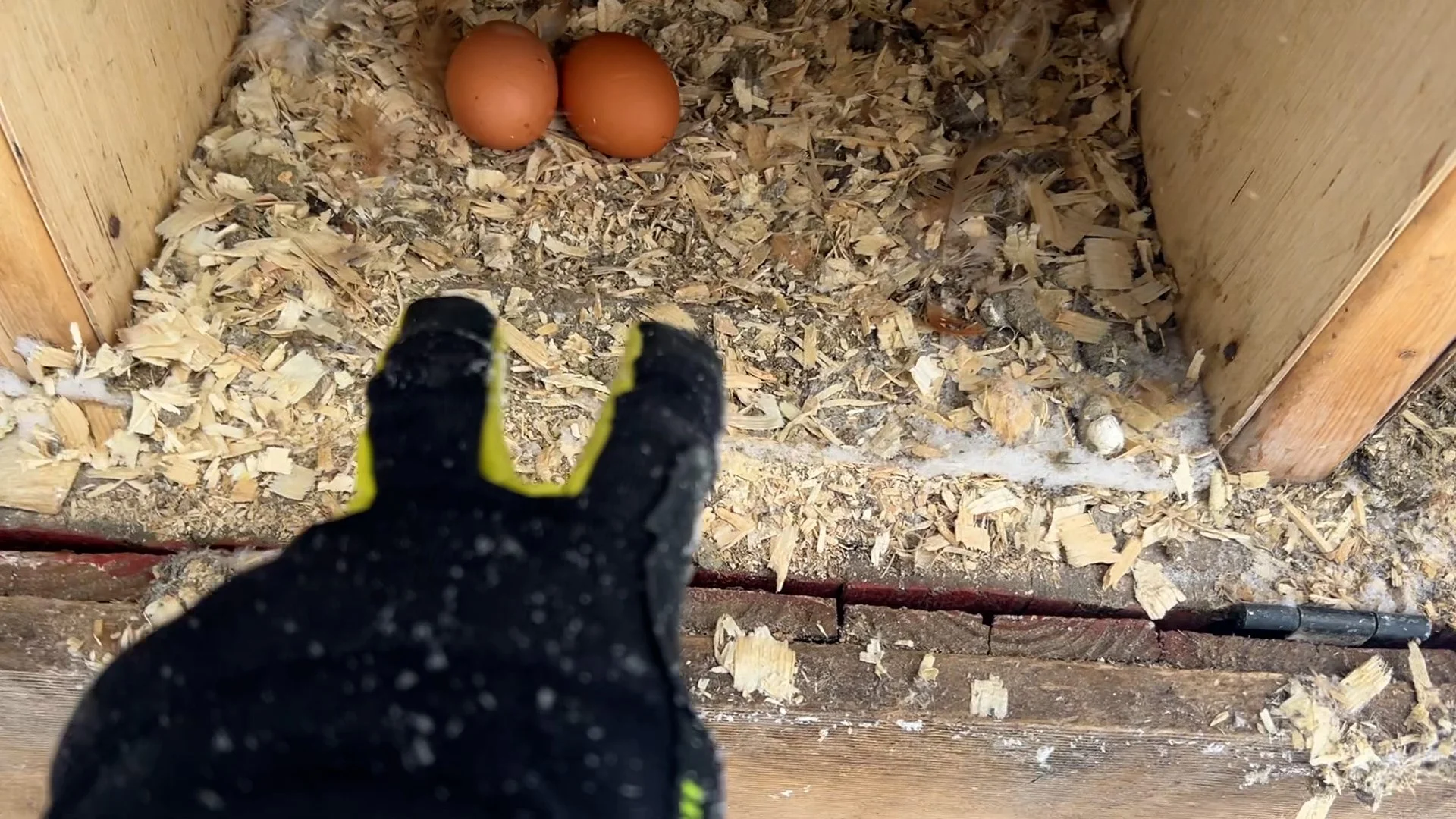
Eggs in the nesting boxes during that bitter cold stretch.
Another challenge, further complicated by the cold weather, is the lack of egg production from our chickens during the short winter days. At it’s lowest point, our 25 laying hens were providing a meager 2 eggs per day. There are things you can do to artificially increase production in the winter months, like adding artificial light inside the coop to encourage greater production. We opted not to go that route. God designed chickens intentionally, as he did all things in this world. Winter is a natural time to slow things down. There are fewer daylight hours so that, at least before the modern era, there was less opportunity to do work. It’s the Sabbath season, for us and for the rest of creation, and we’re not going to mess with that design.
The further complication is the sheer bitter cold. We had a stretch of about 12 days where the daytime temperature never topped out at more than 12° F. If you’re not familiar, eggs freeze, and when they do the shells crack. Those eggs are instantly exposed to potential bacteria that our human digestive tract just can’t risk. So, when eggs crack, the pigs get a tasty treat that they absolutely devour. If we can’t enjoy the eggs ourselves, there’s no better way to utilize them than to put them to work making bacon.
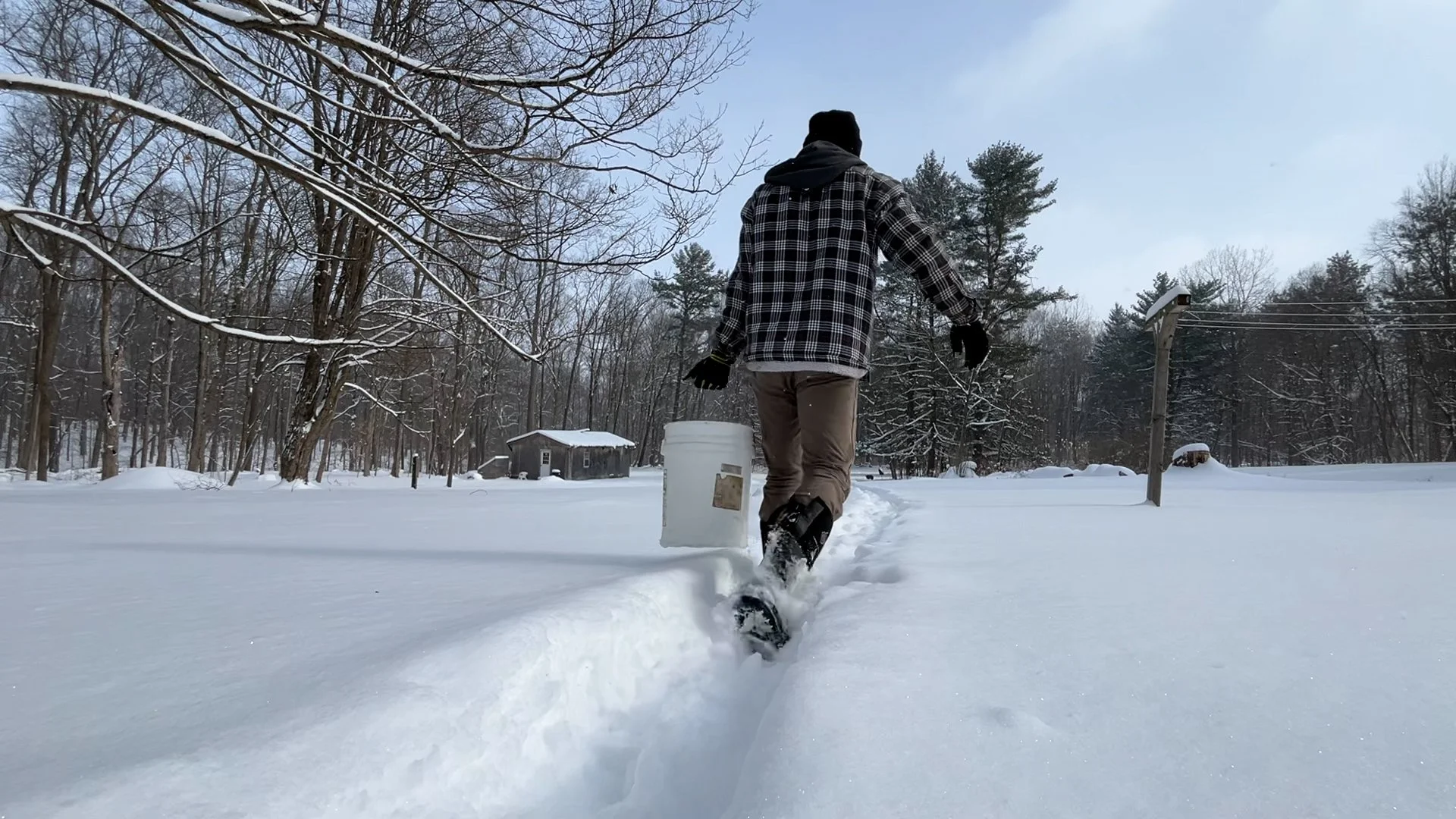
Hauling water in 5 gallon buckets to the pigs.
Fresh water for the animals also becomes a challenge. It’s absolutely amazing how quickly water freezes in temperatures as cold as we’ve had since the turn of the new year. We typically use cup style waterers fixed to a 5 gallon bucket but those freeze and crack, making them irreparable. For the cold months we go back to the normal bell style waterers usually reserved for the chicken tractors. From the time I left our basement door to the point I was ready to hang them in the chicken run (about a 50 yard walk), ice crystals were already forming around the rim. Similarly, if the pigs aren’t thirsty, even in the black rubber bowls, it freezes so solidly that we have bowl-sized discs of ice 6 inches deep that will persist in various corners of the pasture for many weeks until they can completely melt.
I’ll take it all, however, because even though some unique challenges present themselves, there is also plenty of natures bounty to be had during these cold stretches “in the bleak midwinter”.
Deer hunting has been part of my life since I can remember, and our freezers and our belly’s are grateful for that heritage. Beginning in the autumn and, in Ohio, persisting through the first weekend of February, venison processing is a very typical winter activity. This year, my oldest son was fortunate enough to harvest his first deer in mid December, lining up perfectly with our planned timeline for butchering the first of our feeder pigs, affording us the opportunity to incorporate some home-grown, pasture-raised Kunekune pork fat into the ground venison. This makes for a less lean and more appetizing ground beef alternative.
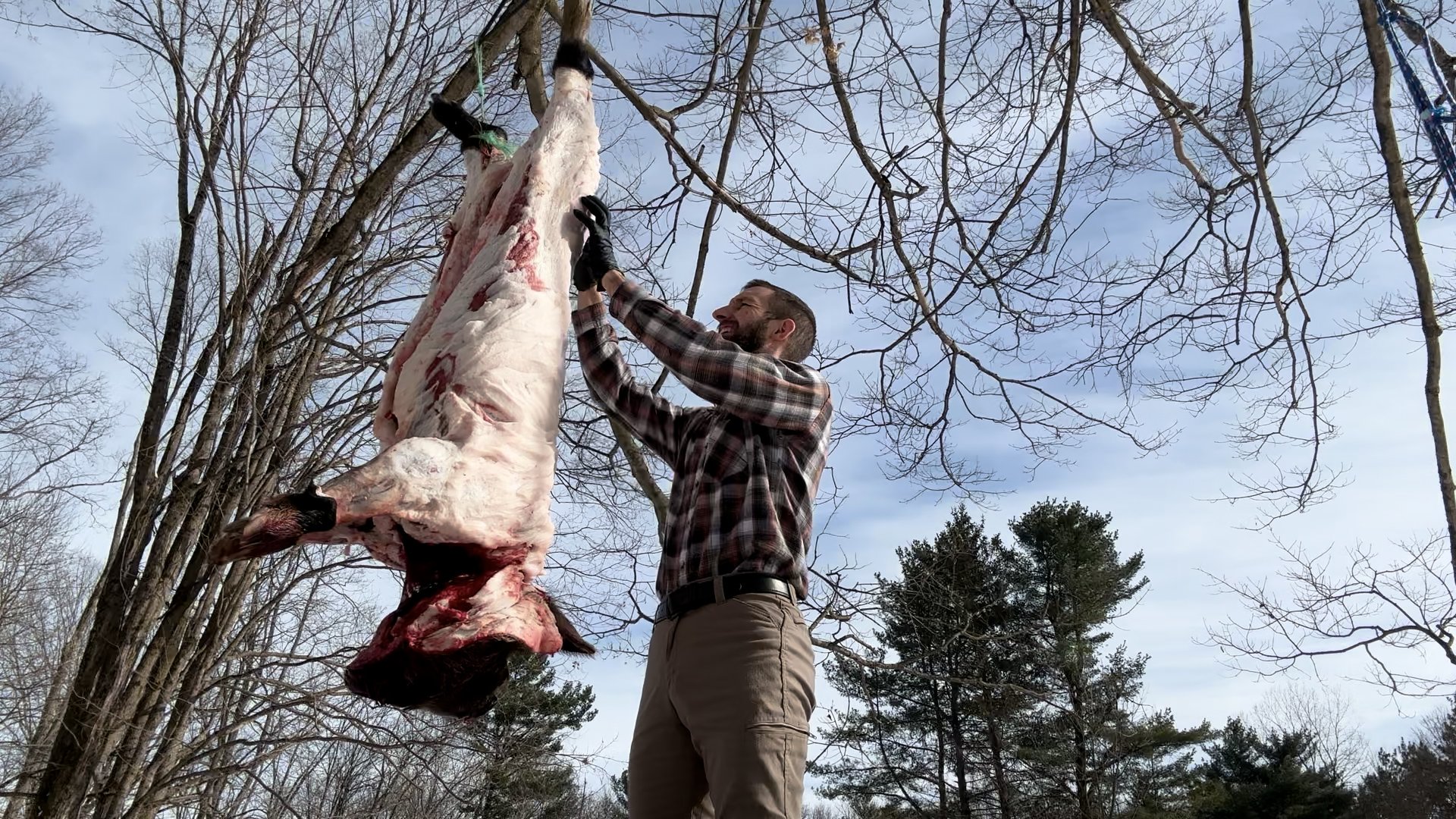
Just a few days after that successful deer hunt with my son, a memory I won’t ever forget, we processed our first whole hog at home. Aptly named “Bacon” the larger of our two feeder pigs “graduated to freezer camp”. For this first attempt, we tried to keep it simple, opting to skin rather than scald, and keep the cuts as basic as possible. 20 months of our labor and care garnered us nearly 100 lbs of the best pork money could buy. Through these bitter cold days our family has been enjoying juicy pan-fried pork chops, savory homemade breakfast sausage, and plenty of home cured, nitrite and nitrate free (other than what naturally occurs in the spices we used as seasoning) hickory smoked bacon. Absolutely mouth watering, and real treat to be able to make at home. We used ECO Cure 1 as an alternative to the nitrite pink curing salt #1.
All of this to say, I do enjoy these sometimes bleak winter months. “To everything there is a season” (Ecclesiastes 3:1). While these are words of wisdom, I can’t help but wonder if we might be able to say it a different way. You see, in the business of life in the modern world, minutes, hours, days, weeks, months, years… they have a tendency to blend together. On a farm, no matter the size, I think we get the rare chance to avoid that blending if we’re attentive to the world around us. Life, in all of it’s seasons, ushers in new things as the old phase out. For that reason I say “to every season there are it’s things.” Winter is for slowing down, stockpiling protein, and awaiting the hope of Spring. We may be in the bleak midwinter, but it won’t stay that way for long!